Highlight · Fusion
From data to a published study
With Samuel Kerrien, Nick Smith, Dinika Saxena and Bilal Meddah
Scientists extracted their data and rebuilt it in other tools to publish it. With studios, built on the structure of the data itself, they could present a study where its data already lives: 150 were published in six months. My part: I organised five workshops with very different teams and found that the request answered a need scientists had not expressed.
01
Introduction
Most scientists extracted their data, converted it to a format of their own, then used it in a Jupyter notebook or wherever they published their paper.
Many section leaders asked for something more native to the Blue Brain Project infrastructure. The publications made by scientists inside the project were often disconnected from it. Internal tools to present results, entities, artifacts and other data would give the project stronger credibility.
02
Challenge
The studio project started with that request. After organising five workshops with very different teams, I realised it answered a need scientists had not expressed. The first reason was time: keeping the data in an environment already tailored for it was a way to be sure no error or issue would creep in over time. The second was formatting. Many users had to re-implement their data in several tools and make sure it stayed readable, accessible and well designed. A structured way of showing their work lifts a heavy mental load from their daily journey.
Not everyone agreed. Two department leads feared a rigid structure that would block the members of their teams, and thought we would build something not flexible enough to evolve.
03
What we changed
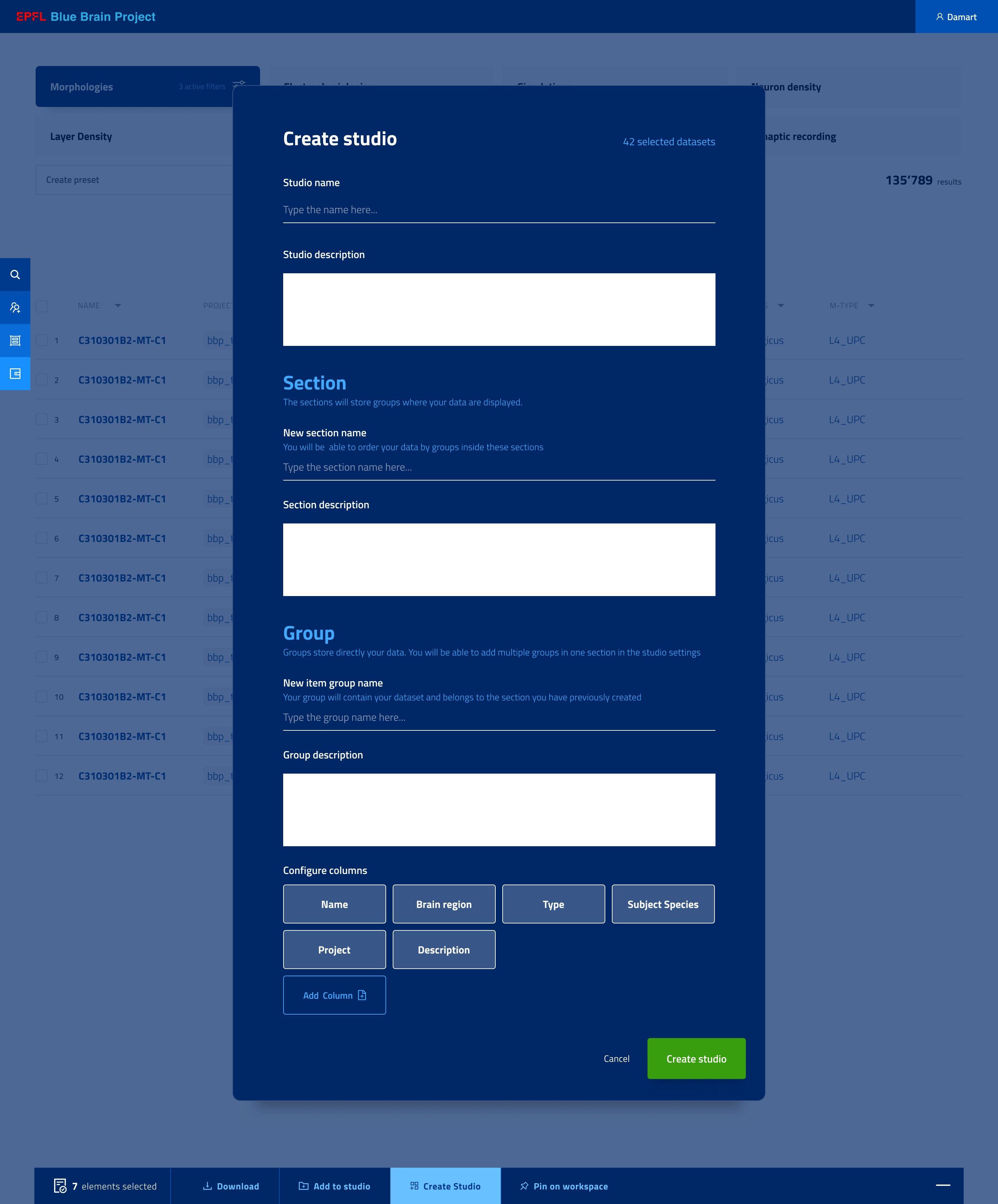
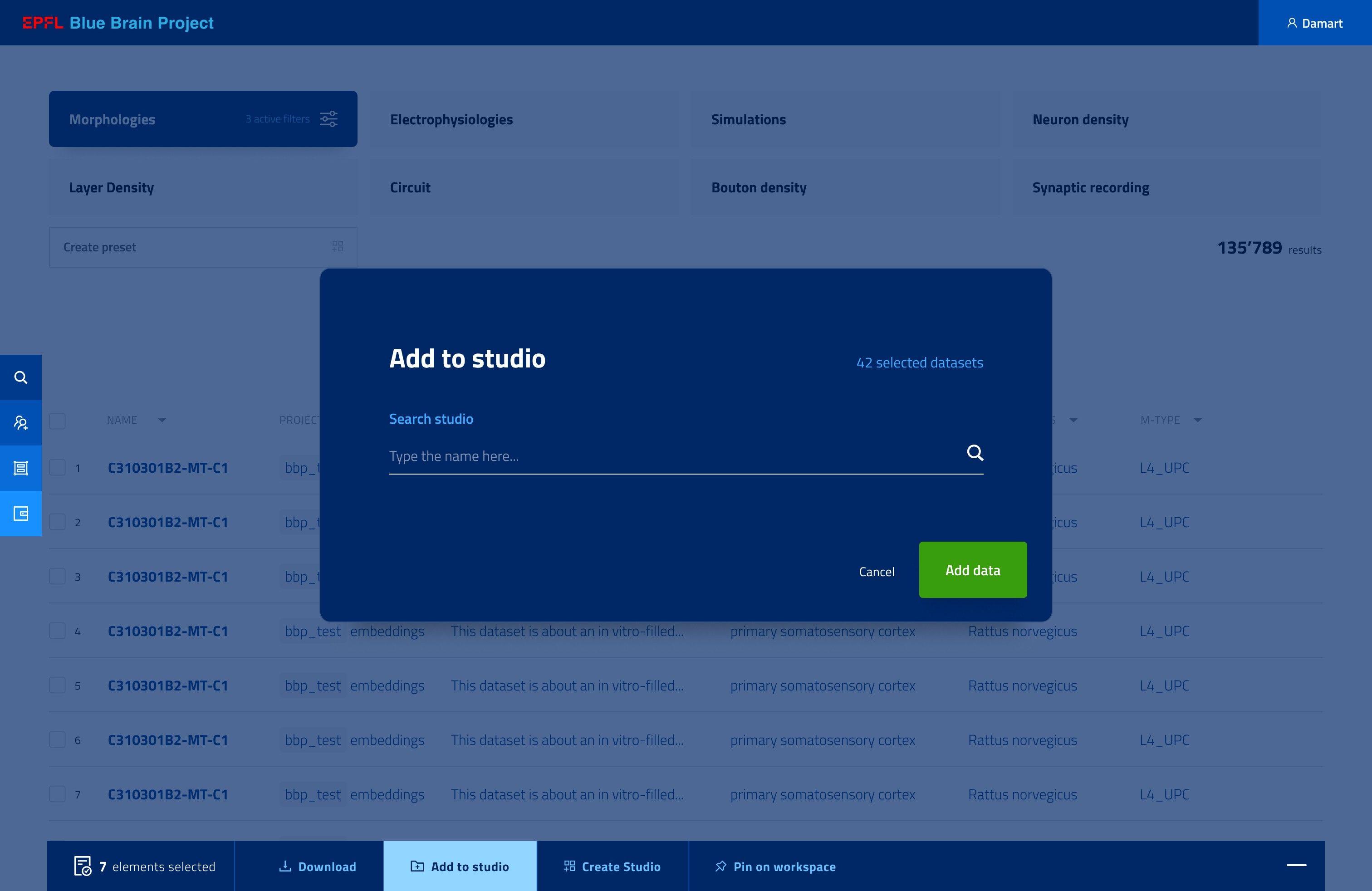
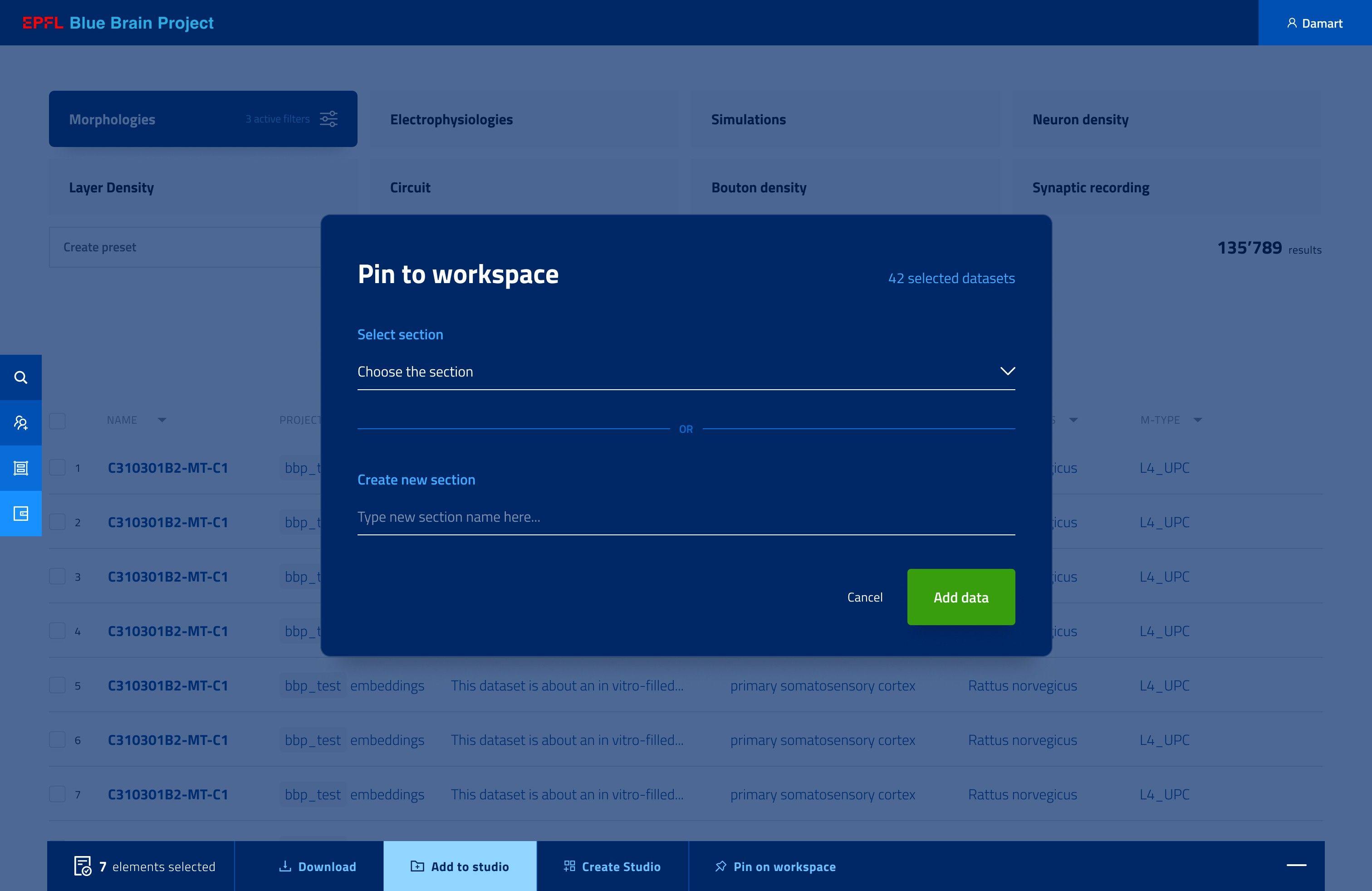
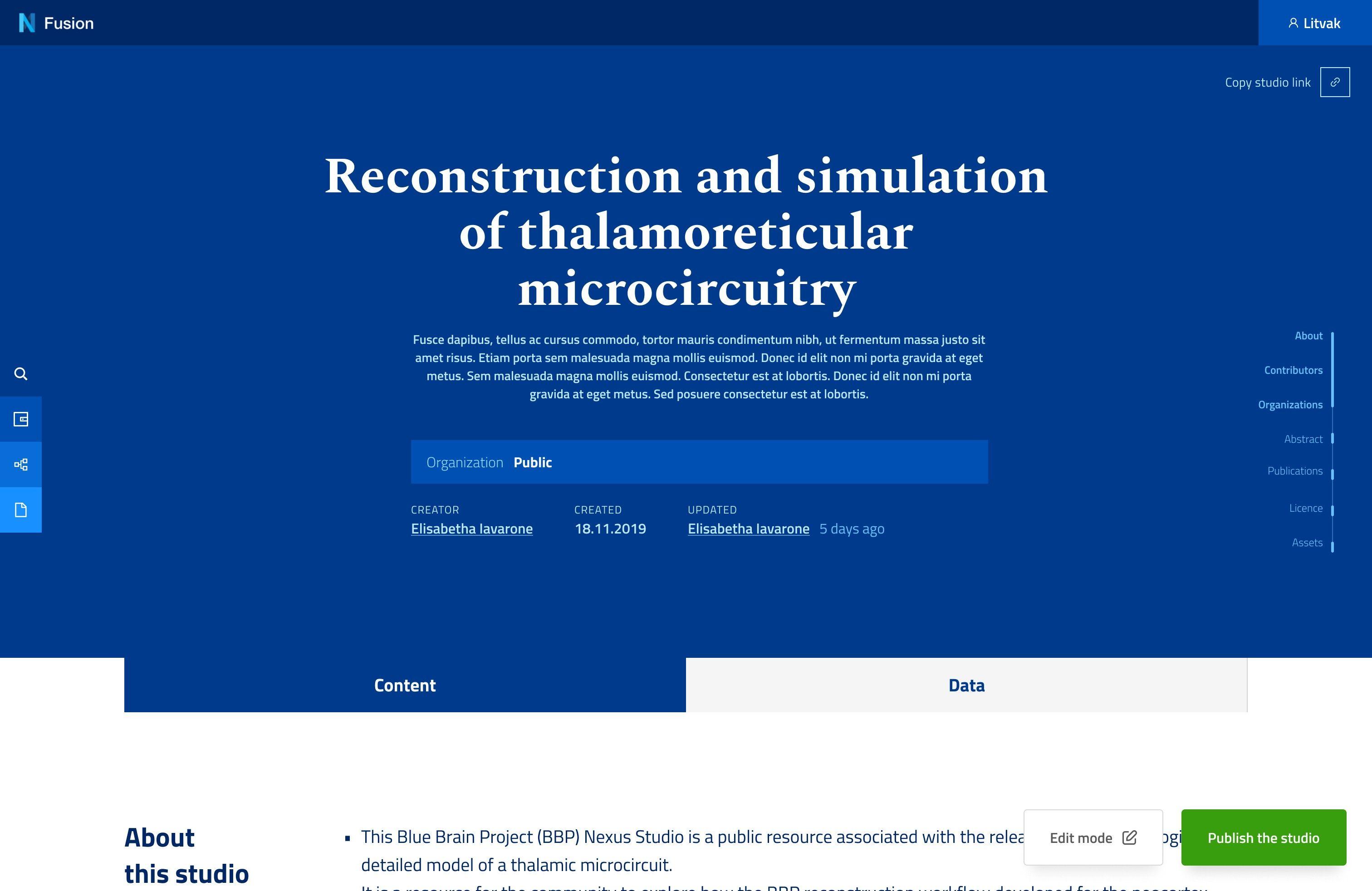
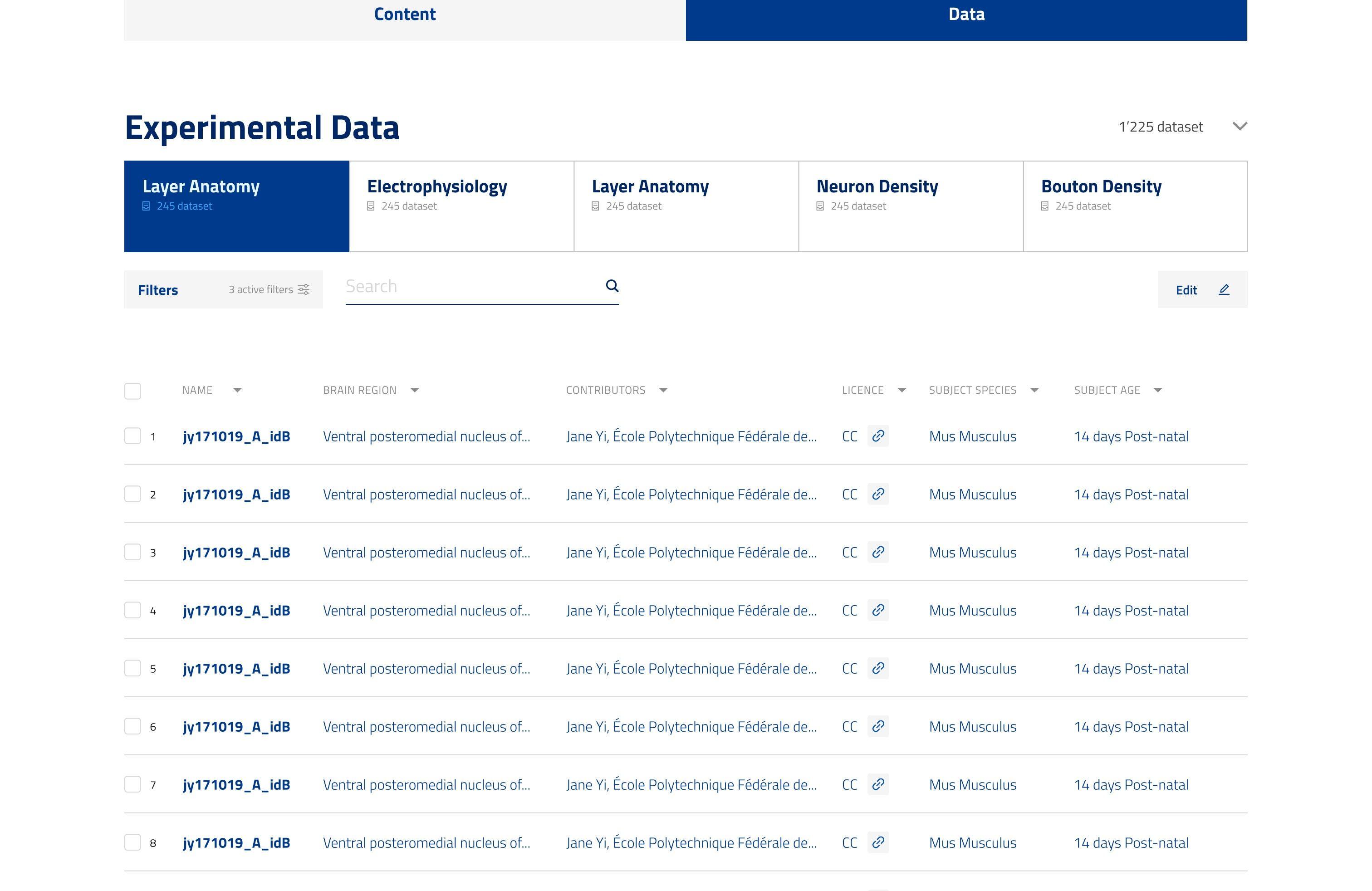
We built a kind of CMS closely tied to the data structures. A studio has sections, a section has groups, and a group holds data, with the columns its author chooses. A scientist can create a studio from the datasets selected in the data cart, or add them to an existing one.
To answer the fear of rigidity, we developed several ways of customising a studio, so scientists keep the freedom to bring different types of data and show them with different kinds of visualisation.
01 / 04
Add the selected datasets to an existing studio
04
Real impact
150 studios were published in six months, mainly by six teams who put online the results of projects carried out over the previous ten years.
In hindsight, I would make every studio publicly available, even if making the data behind the studios public would have met some scepticism from the scientific teams.
Highlights
A closer look at three key challenges, the decisions behind them, and how they shaped the product.