Summary
From a long, complex process, rebuilding a digital brain and modeling its electrical behavior, to a guided path to explore, build and simulate, from a single neuron to the whole brain.
From a long, complex process, rebuilding a digital brain and modeling its electrical behavior, to a guided path to explore, build and simulate, from a single neuron to the whole brain.
From a long, complex process, rebuilding a digital brain and modeling its electrical behavior, to a guided path to explore, build and simulate, from a single neuron to the whole brain.
Prototype first
I constantly push stakeholders to build a prototype or a proof of concept before any pure design work, to test the value proposition and the business plan.
2023
Product designer: user research (interviews, journey mapping), product roadmap, workflows, pages, journeys and interactions. Frontend and backend engineer.
Neuroscience: connectomes, neural circuits, morphological-electrophysiological models
Rebuilding a digital brain and modeling its electrical behavior is a long process, carried out by scientists who specialize in very different brain regions.
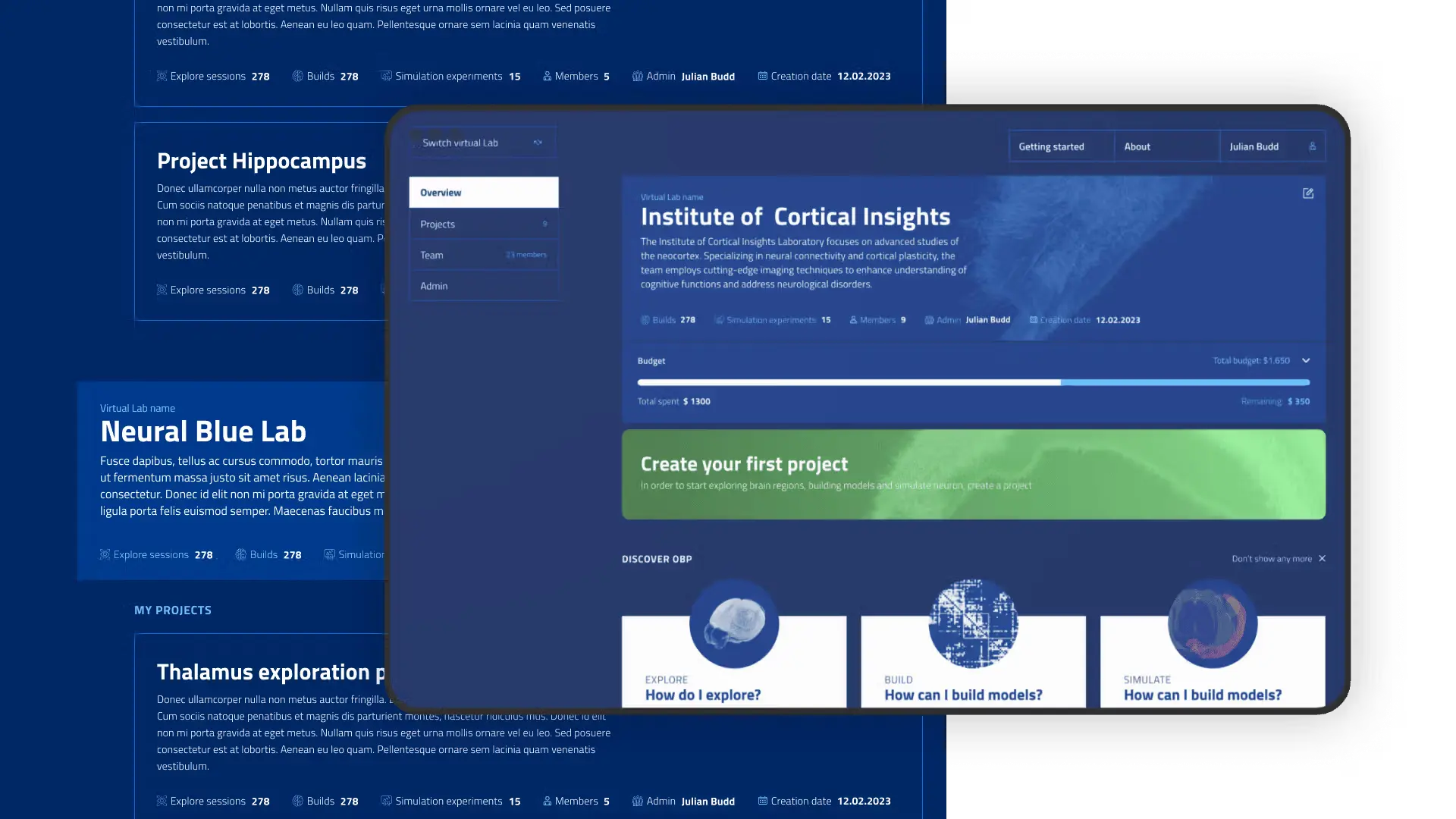
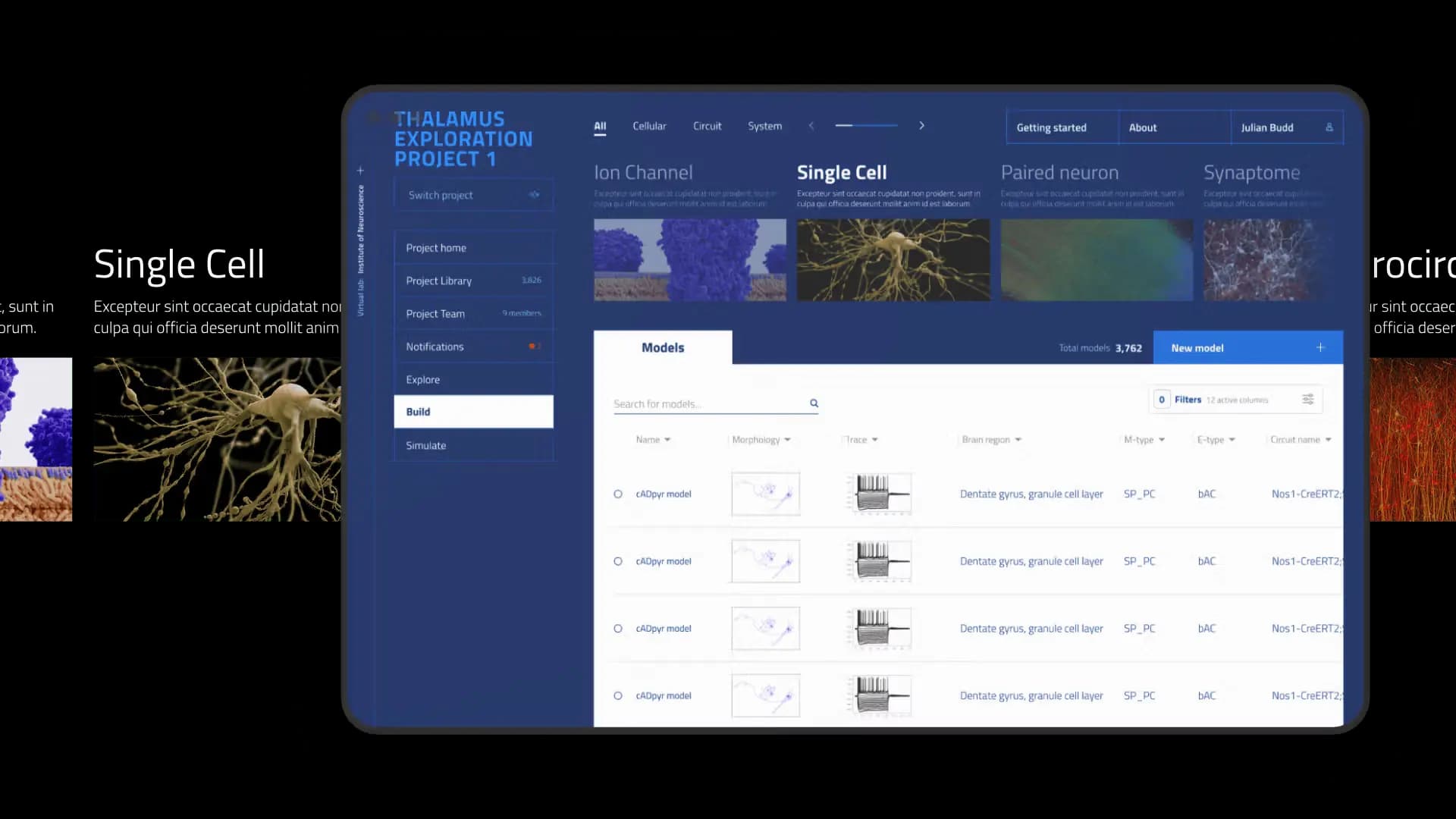
Organize the whole application around three constant gestures at every scale, explore resources, build models, simulate them, then bring them together in a virtual lab.
One space for models, simulations and explored items, which opens the way to an AI-assisted paper-writing feature.
01
A digital brain to rebuild, step by step, by experts who do not work on the same regions
Neuroscience is a vast field: each scientist specializes in one or more brain regions. The Swiss Brain Observatory had to let them connect neural circuits and build connectomes, matrices that represent the connections between thousands of neurons. The work is long and happens at several scales, from the single neuron and the ion channel up to the microcircuit and the whole brain.
02
What I pushed through, negotiated or refused
I chose to start from workshops rather than from a single model: each team explained the problems of its daily work, and quick prototyping gave common ground between very different solutions. Through every iteration, the core concept stayed the same: explore resources, build models at different scales and simulate them. I then brought model-building experiments, simulations and the items gathered in Explore into one space, the virtual lab.
03
From scattered data to a guided exploration, from the brain atlas to simulation
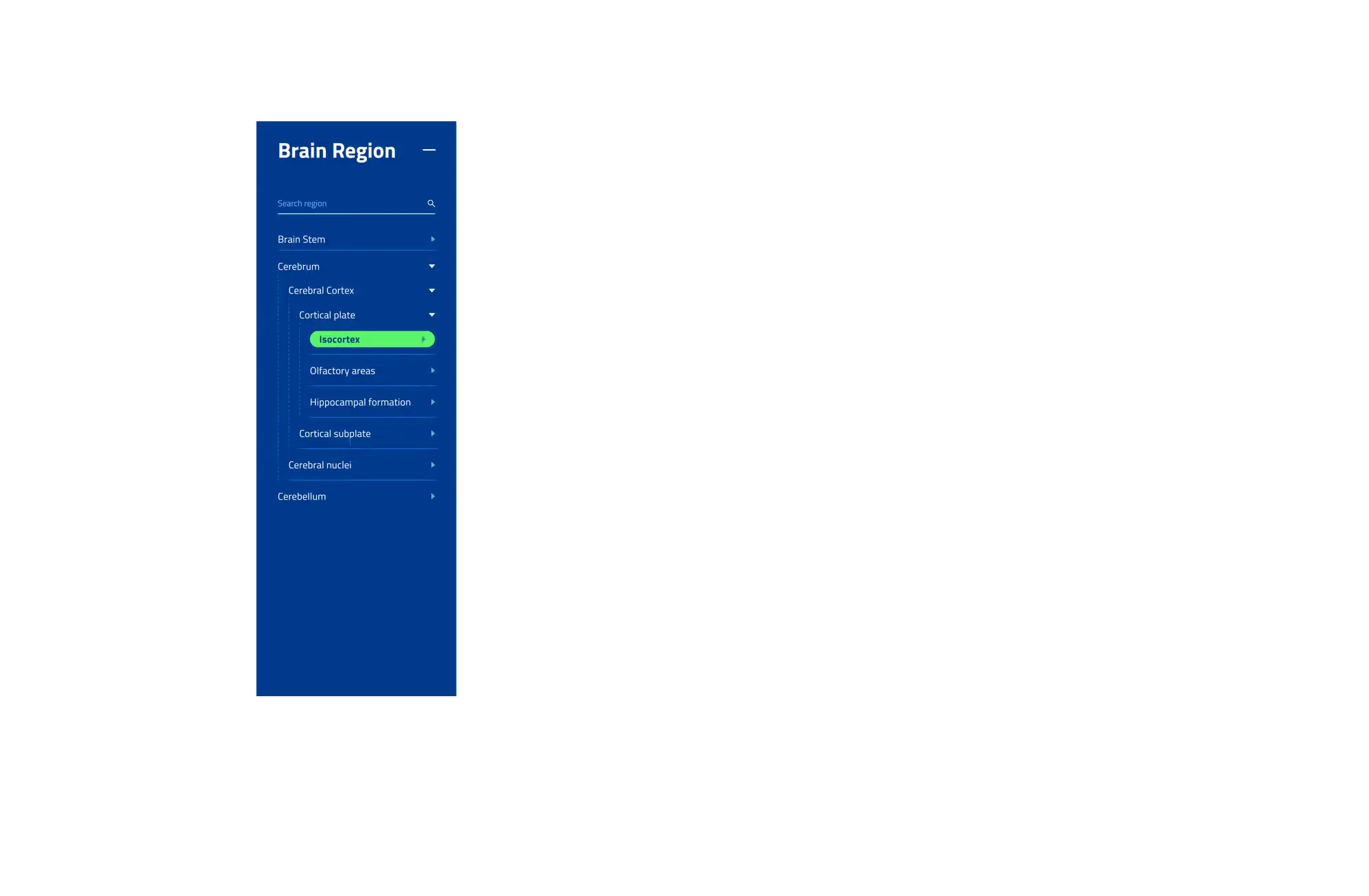
The side panel of a region (here the isocortex), with its header and cell types.
The region’s four tabs.
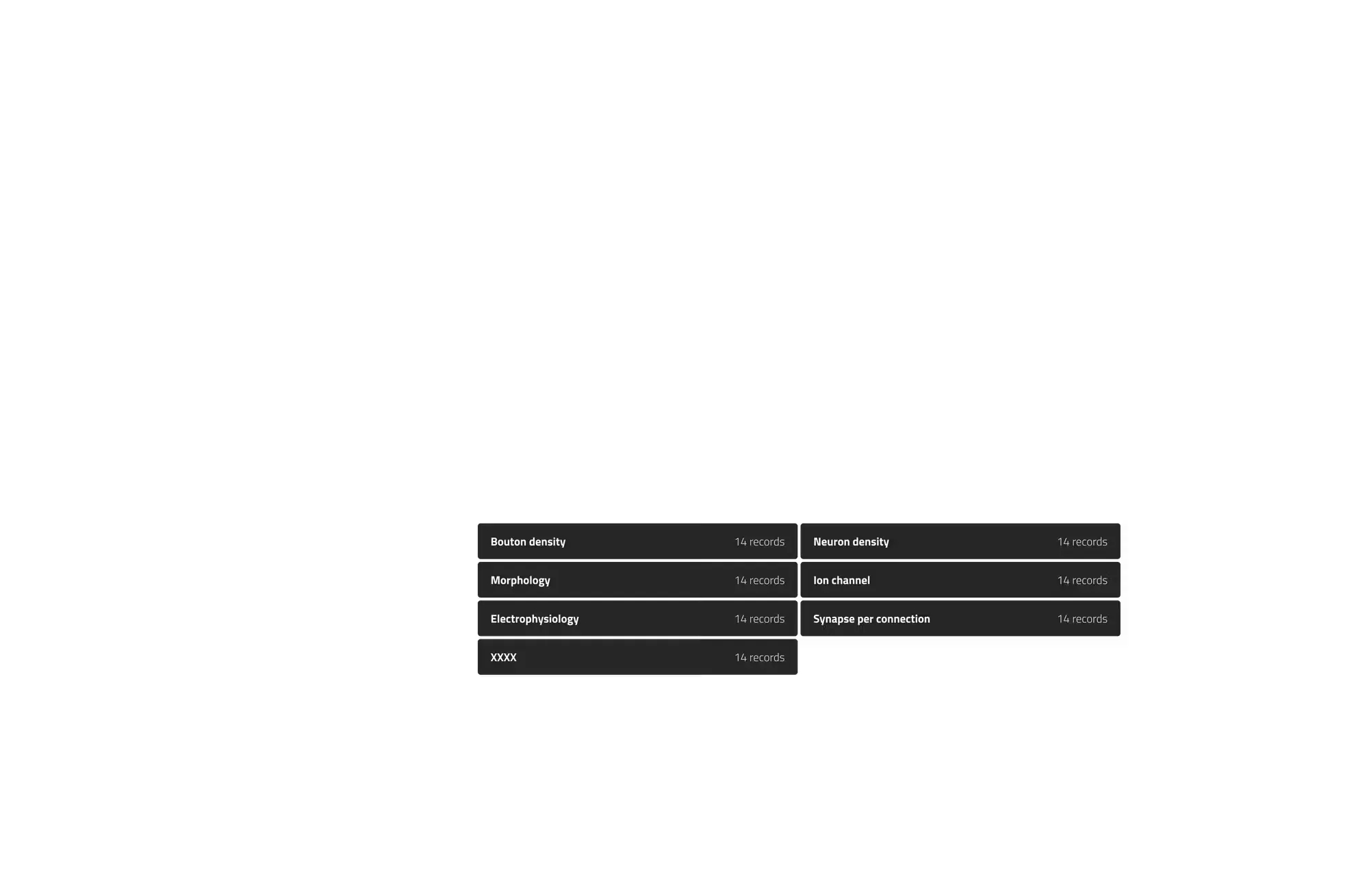
The seven dataset types.

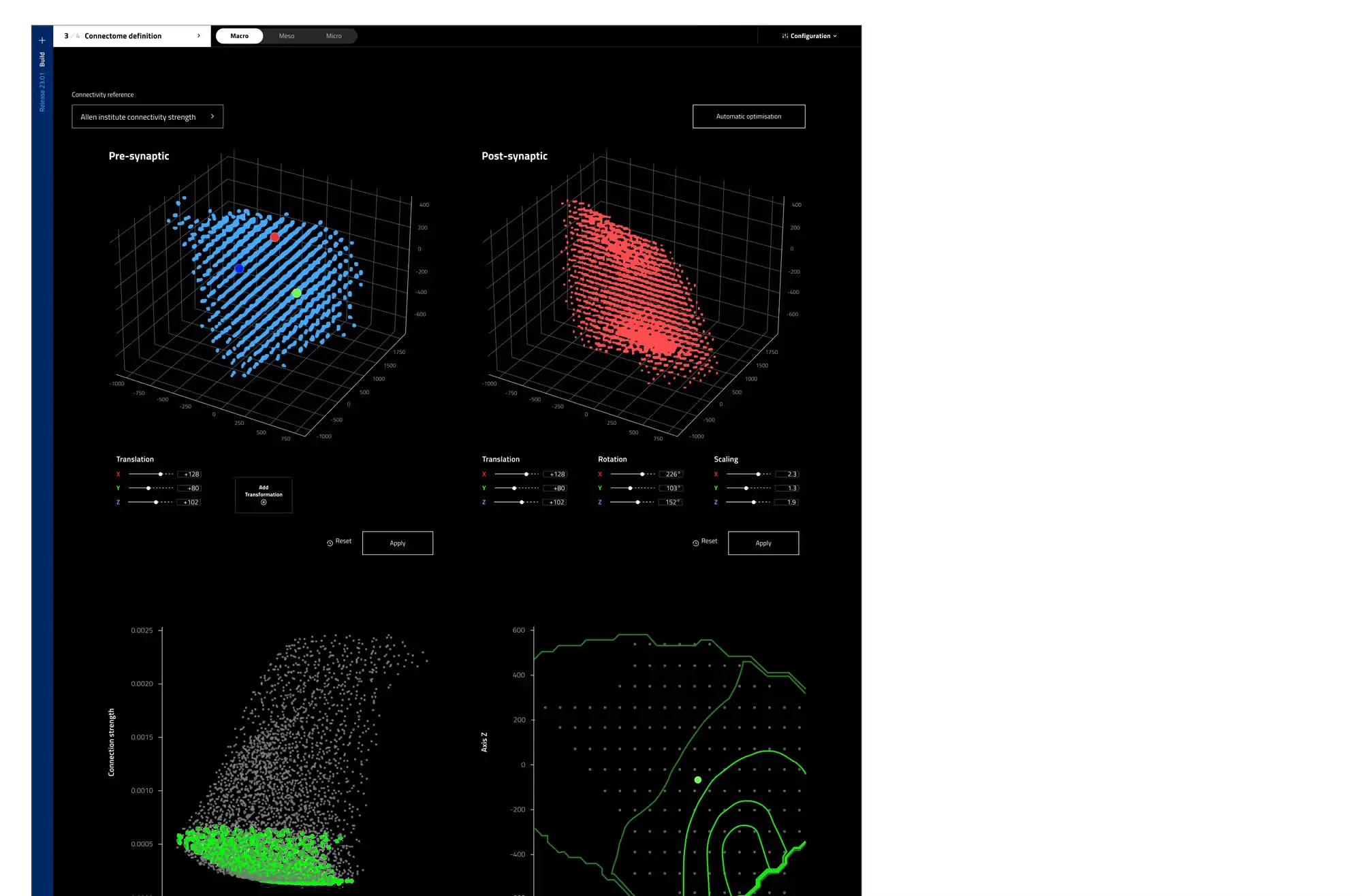
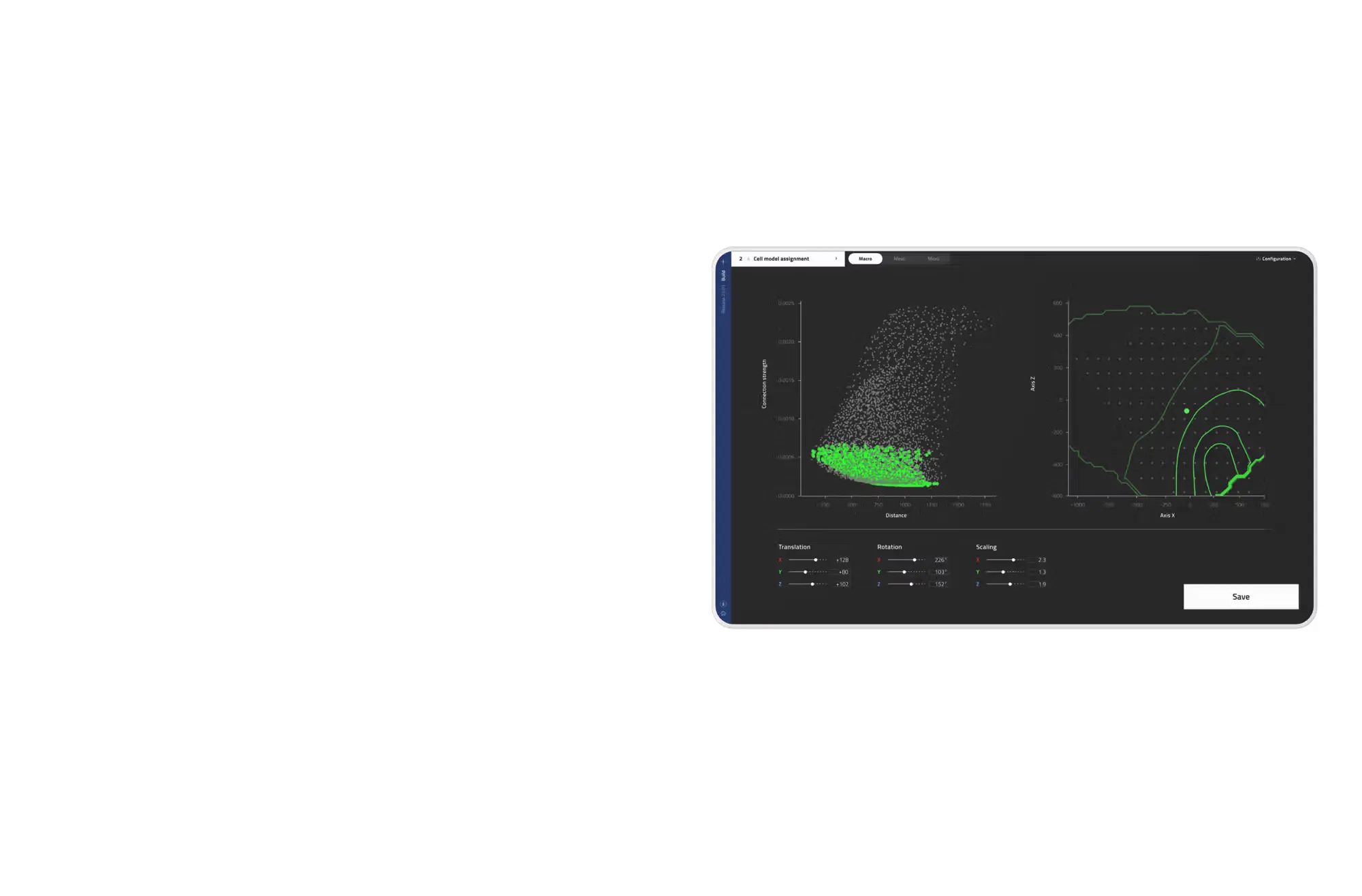
The three-dimensional projection that lets users understand and manipulate the parameters of each morphological-electrophysiological model.
The interactive 3D matrix, to move between layers of regions, with intensity and plasticity.
A lab’s projects, each with its own scale: single neuron, ion channel, microcircuit and six others.
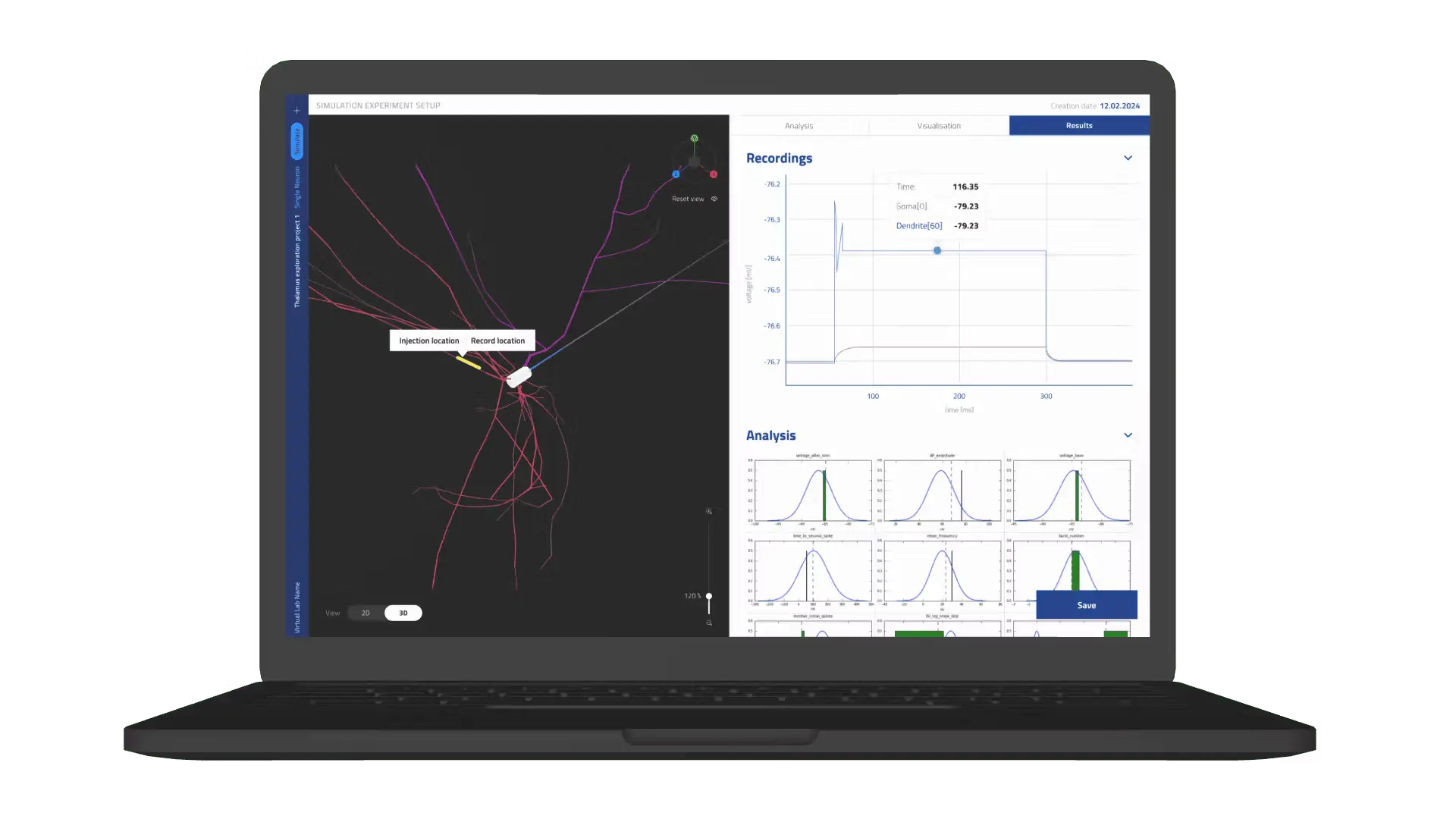
Launching an analysis to validate parameters, with control over the quality of the simulation.
04
The value generated for research
A virtual lab that brings together model-building experiments, simulations and the items gathered in Explore.
An AI-assisted paper-writing feature, made possible by that single space.
Control over the quality of analyses and simulations, even massive ones, left to users.
An AI literature search next to the atlas, to go deeper into knowledge discovery.
05
What I learned and how mature I am
The workshops showed that each team enriches the others’ process when it exposes its real difficulties: I would repeat this format from the start, with quick prototypes in every session.

