Highlight · OBI
Single neuron simulation approved and adopted
With Darshan Mangde
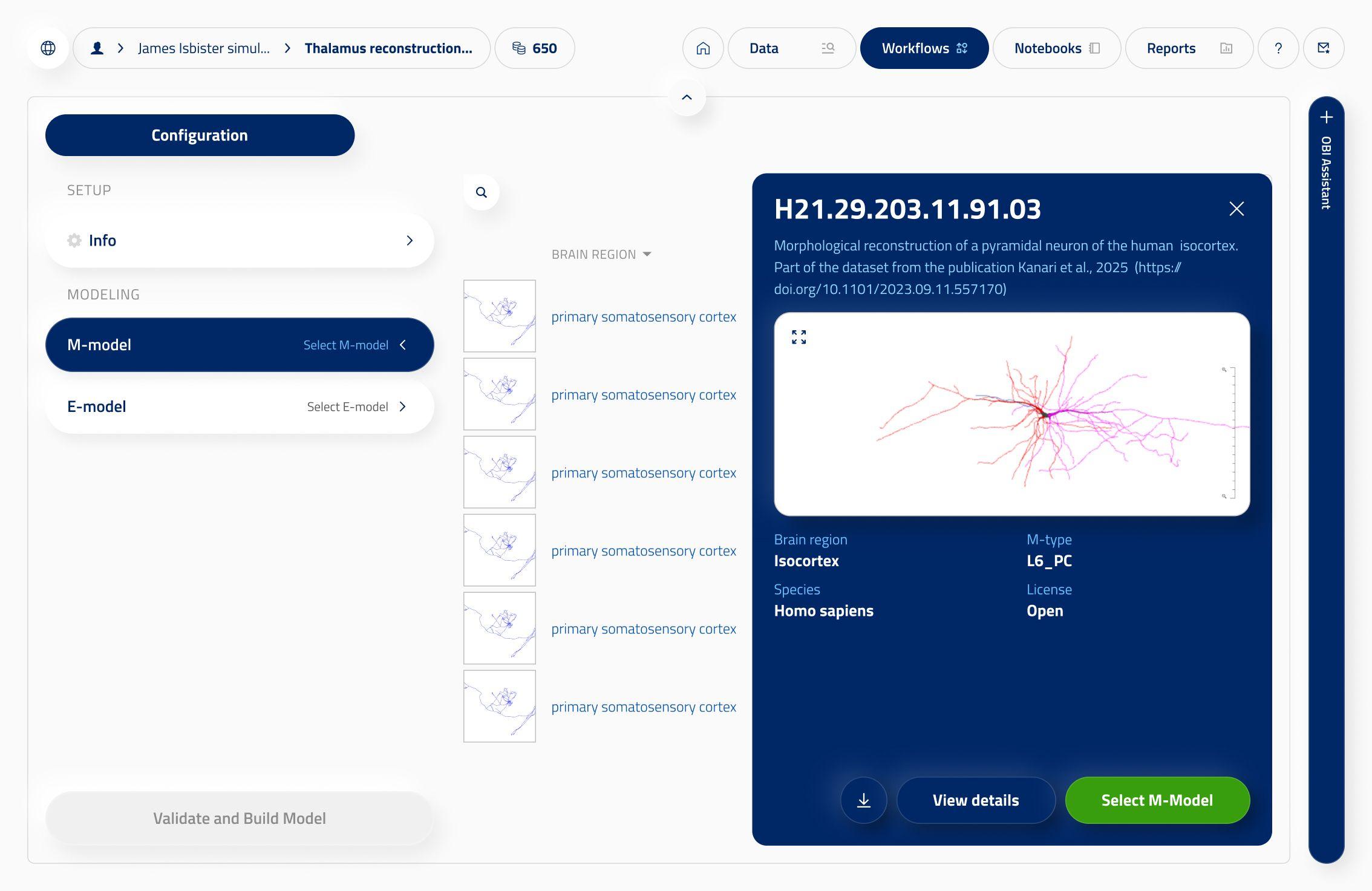
Single neuron models and simulations lived in private Jupyter notebooks, built by and for a few labs. With Darshan Mangde, lead scientist for single cell build and simulation, we turned them into a workflow open to any neuroscientist: more than 3,000 simulations in the first month. My part: I made the simulation much simpler by turning the OBI data explorer into a browsing wizard with advanced filtering, to reach the thousands of data items and assemble a neuron morphology and an electrophysiology.
01
Introduction
Darshan Mangde is the lead scientist for single cell build and simulation, and he was the product owner of every activity related to the single neuron.
Until then, simulating an isolated neuron and building an electro-morphological (EM) model relied on in-house tools, each one carrying the methodology of the scientist who wrote it. Opening them to a wide public meant starting from an agnostic vision of the process and the workflow.
02
Challenge
The tools lived in Jupyter notebooks, often private and hard to access. Their results stayed in the hands of a handful of users, so models, simulations and their analyses were hard to share.
The vocabulary was just as local, shaped by the habits of each laboratory. Often the work was handed to a software engineer who built a one-off tool for one team or one scientist.
03
What we changed
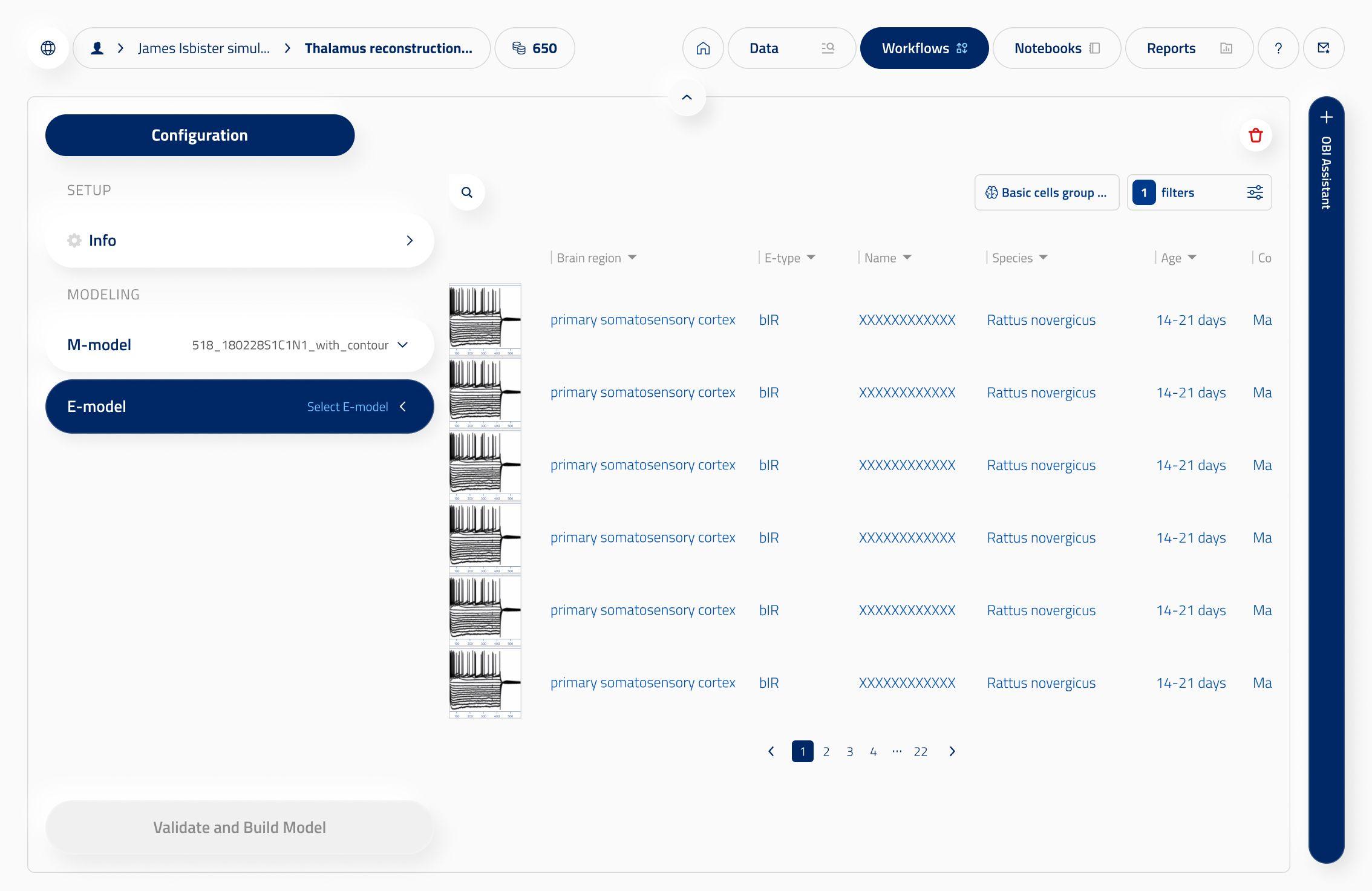
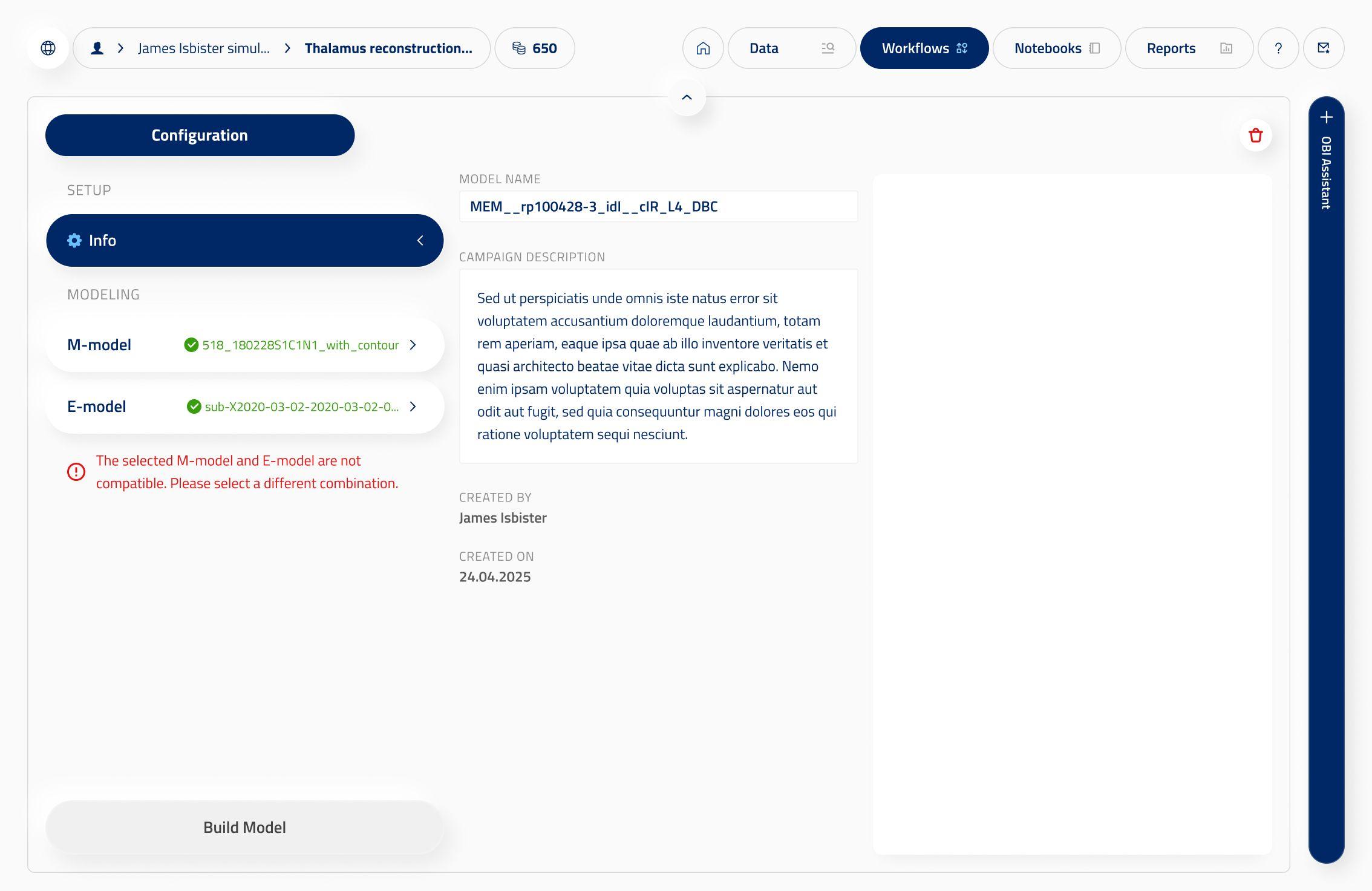
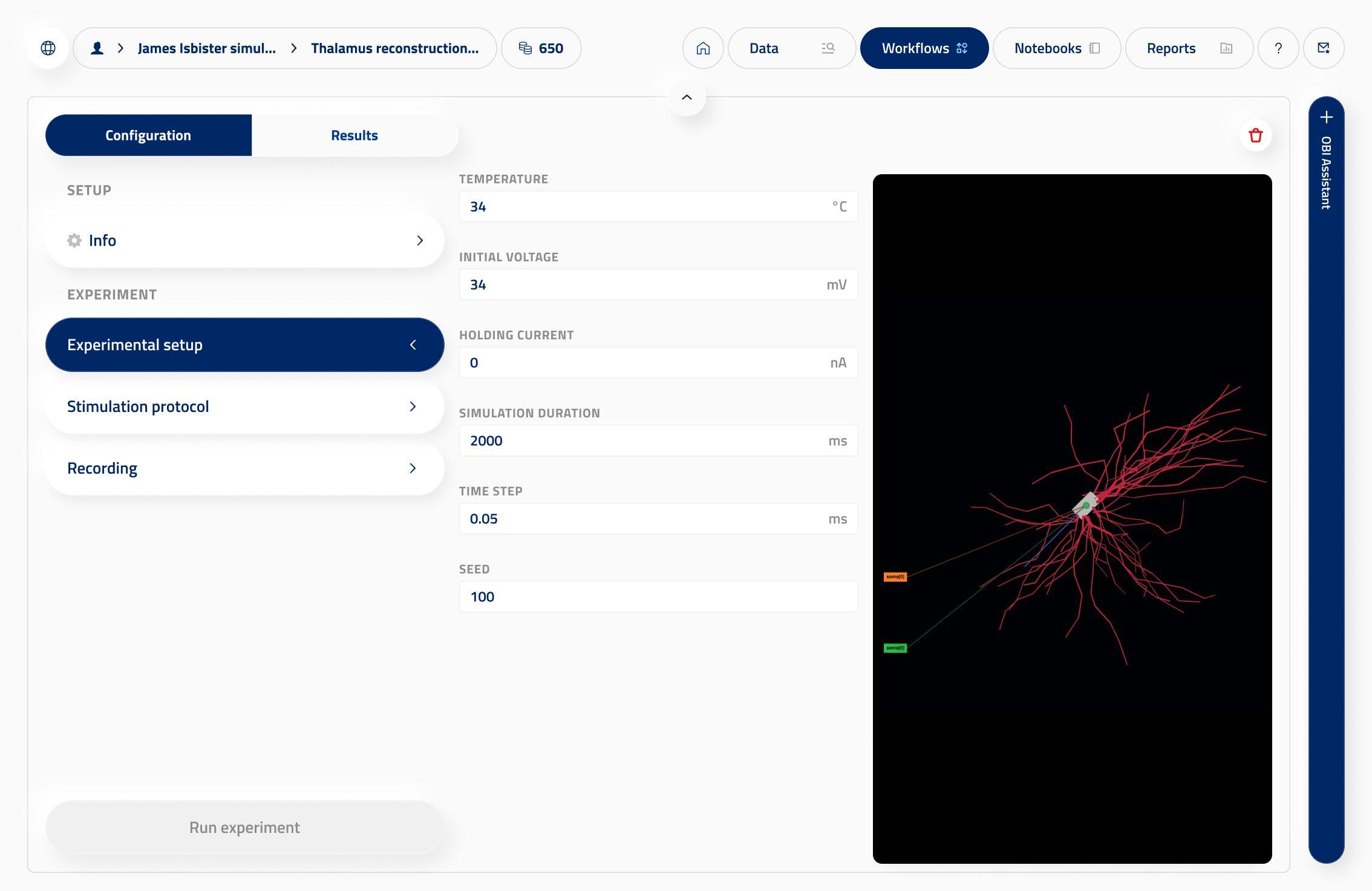
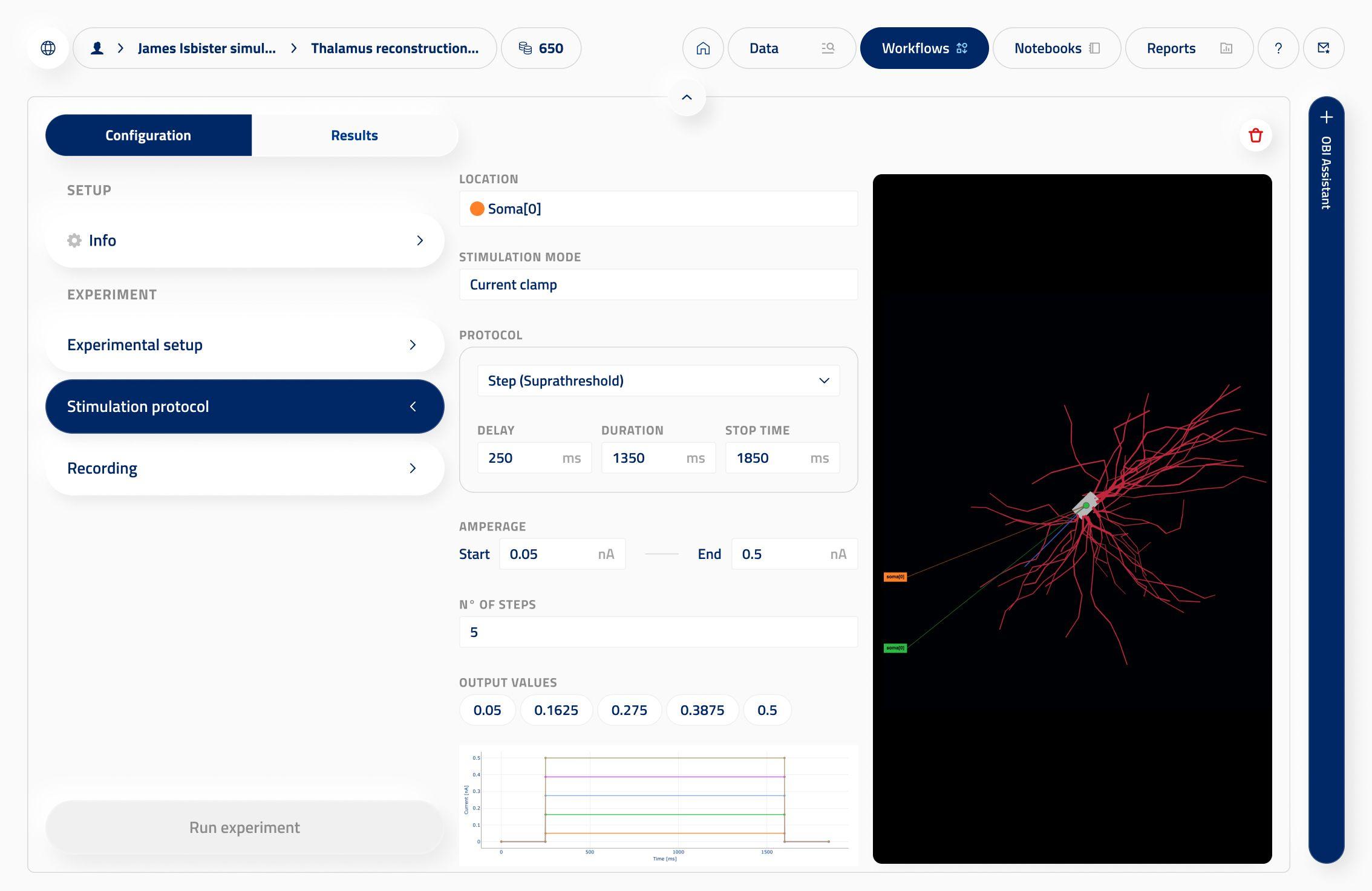
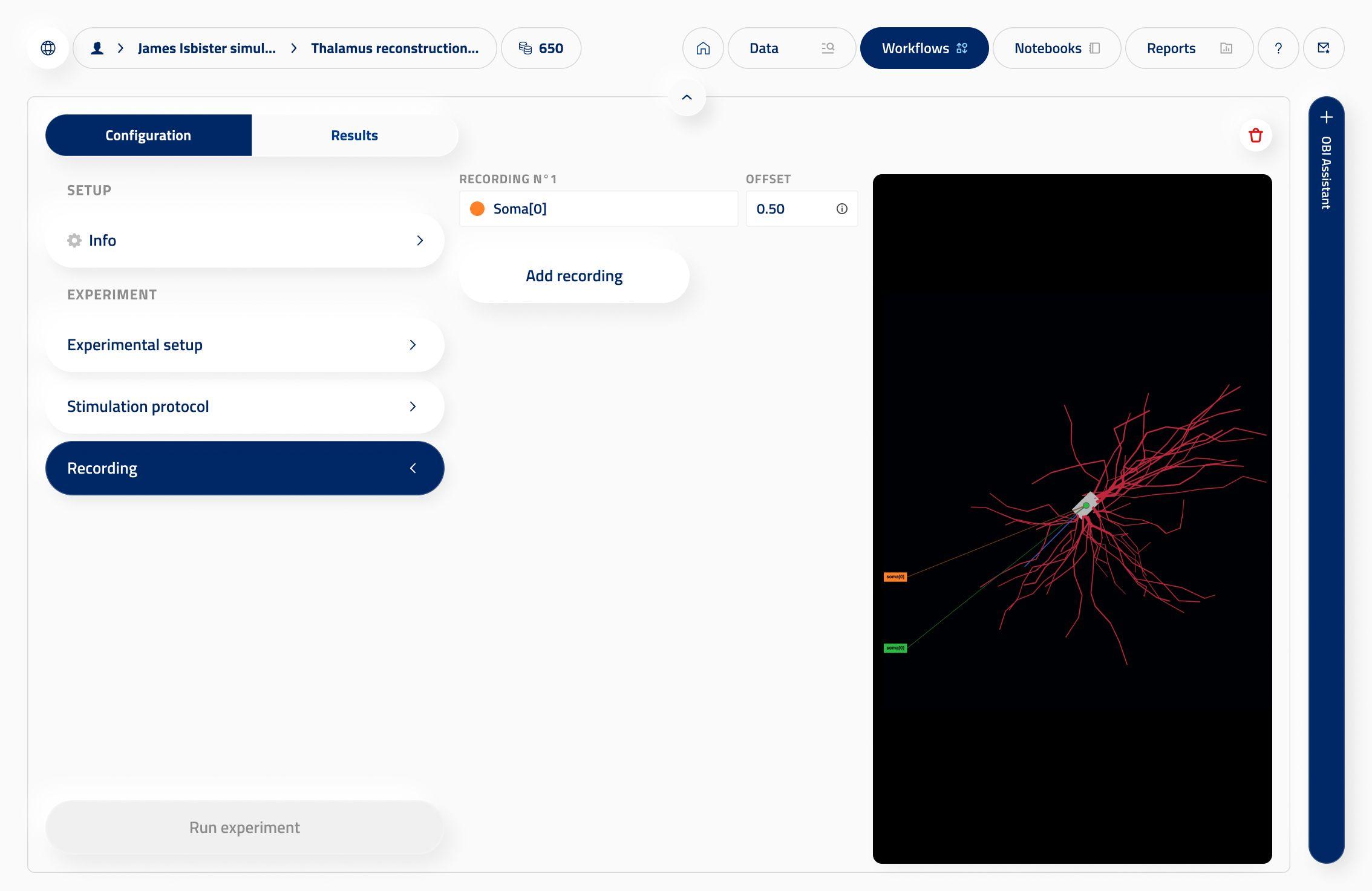
We brought the creation of a model into the platform: first select a morphology, then an electrophysiology, to compose a neuron. We then adapted it further within a method called OBI 1, which standardizes how models and simulations are created. The workflow became agnostic to the very specific practice of building or simulating a neuron, and its parameters use a vocabulary more commonly accepted across the neuroscience community.
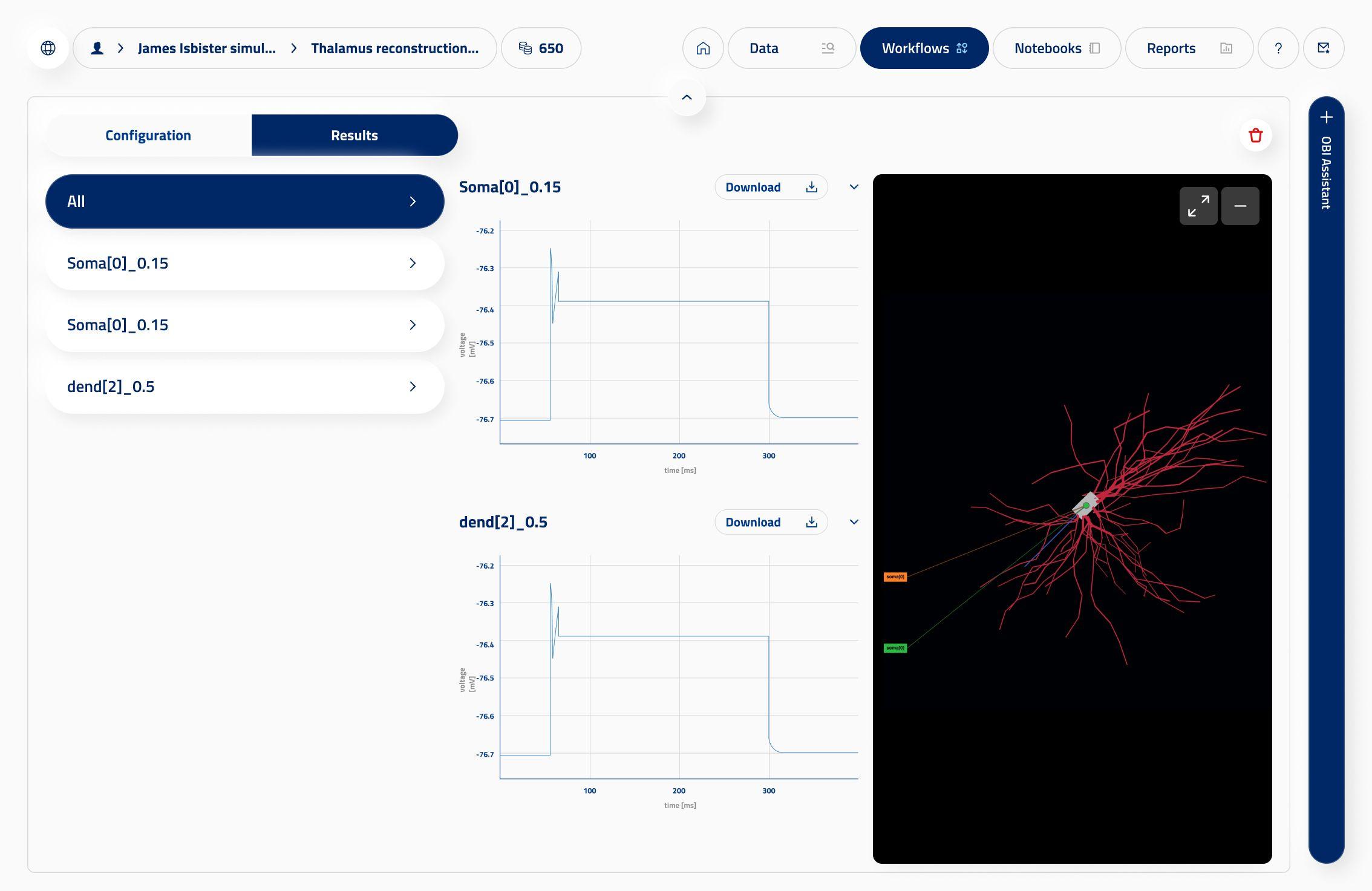
We added transparency: the results of model building and simulation come with access to the code that produced them. Users leave their personal, private code behind while keeping control over what happens. Our first version was greatly simplified, but too unique, tailor-made for single neurons: other scales such as ion channel, paired neuron, NGV system or brain regions would each have needed their own solution. So we moved to OBI 1, a common way of processing models and simulations.
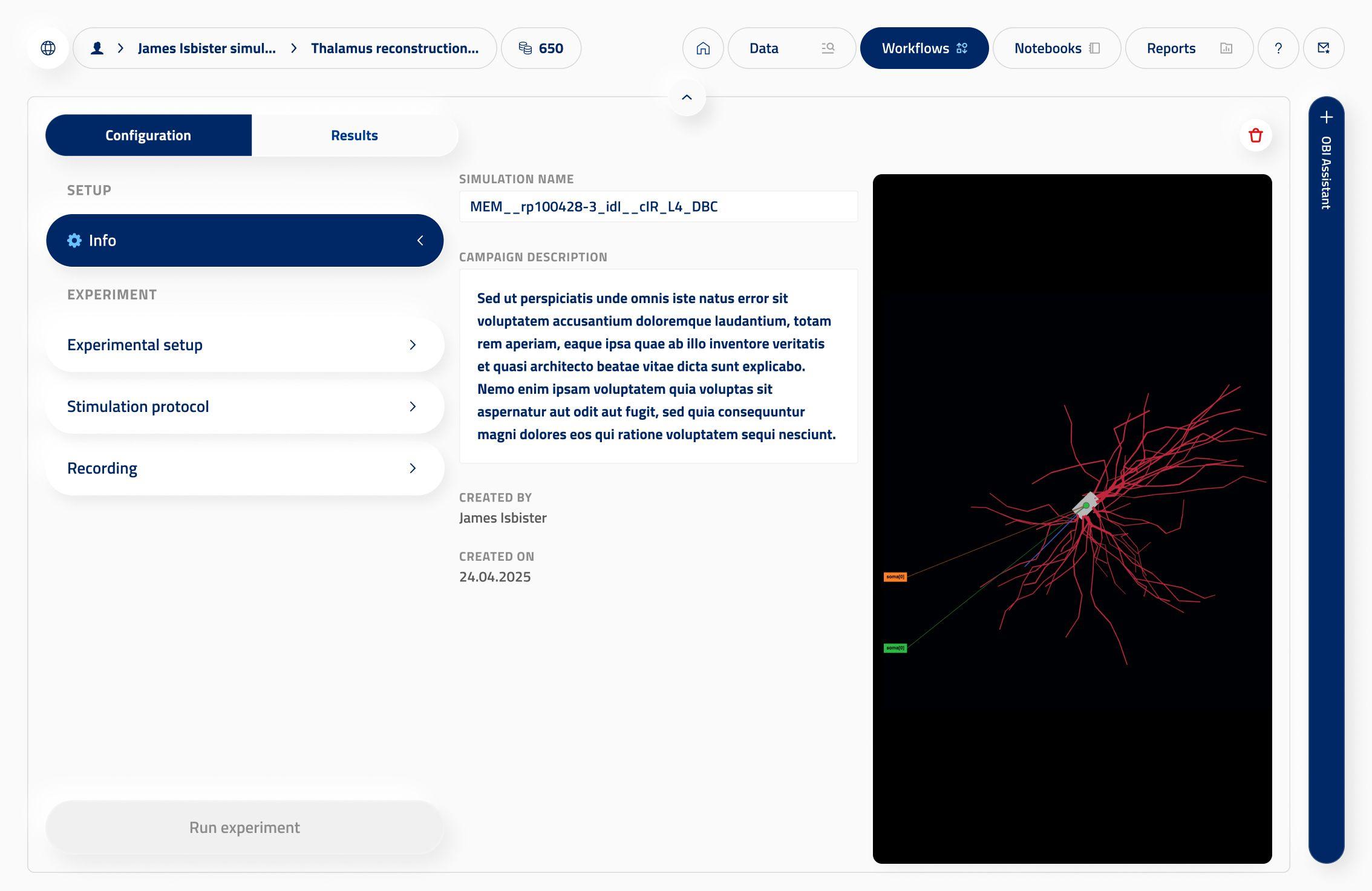
01 / 05
Simulate, step 1 — Name and describe the simulation
04
Real impact
All the scientists approved it, through James Isbister and the rest of the team. According to our Chief Science Officer, it is a unique tool that revolutionizes the speed and ease of building single neurons and simulating them. Generalizing these methods put real tools in the hands of new users who do not know the neuroscience environment of the OBI team.
More than 3,000 single neuron simulations were launched in the first month after the release of version 2 of the simulator, in February 2026. This simulator is a building block of neuroscientific simulation. In hindsight, we would have created a public version of this software, giving much faster access to the logic behind OBI's model building and simulation campaigns. And, if it had been possible, an import system for users' own code, converting what they have always done into working pieces of OBI code with the help of an AI agent that understands the OBI 1 methodology.
Highlights
A closer look at three key challenges, the decisions behind them, and how they shaped the product.